EvilProxy
- 8
- Global rank
- 54
- Month rank
- 50
- Week rank
EvilProxy is a phishing-as-a-service (PhaaS) platform that enables cybercriminals to bypass multi-factor authentication (MFA) and hijack user sessions. It leverages reverse proxy techniques to harvest credentials and session cookies, posing a serious threat to both individuals and enterprises.
- Phishingkit
- Type
- Unknown
- Origin
- 1 August, 2022
- First seen
- 19 October, 2026
- Last seen
How to analyze EvilProxy with ANY.RUN
IOCs
IP addresses
- 204.79.197.203
- 4.152.89.97
- 150.171.109.105
- 150.171.22.17
- 172.67.220.130
- 52.110.17.3
- 34.104.35.123
- 3.5.216.232
- 142.251.127.84
- 23.52.181.212
- 172.217.118.4
- 150.171.28.11
- 150.171.109.107
- 95.100.135.18
- 172.217.117.4
- 52.110.17.15
- 48.209.138.168
- 3.5.217.162
- 35.190.80.1
- 135.232.92.97
Hashes
- 239721c2965f409d245952f9dce02135bb9f8e7e9cfb245c1e1b8e8a9c8b751c
- db39694c444ea393569aafb2cd8ec865006f3df9ecbcb7996e7b219b30ec366d
- a796b38365910aa3443c68fa88e9f1e91afc0ac9d9478dd631b026555505d9ab
- b9fa2d52a4ffabb438b56184131b893b04655b01f336066415d4fe839efe64e7
- 75da533888189d13fc340d40637b9fc07a3f732e3fcf33ec300f4c7268790a62
- 907f2709d1d3c8fa26294938f4080bc477e62281c4c50a082c22db0195cda663
- 22ca9415e294d9c3ec3384b9d08cdaf5164af73b4e4c251559e09e529c843ea6
- 3d0361a85adfcd35d0de74135723a75b646965e775188f7dcdd35e3e42db788e
- eacd09517ce90d34ba562171d15ac40d302f0e691b439f91be1b6406e25f5913
- 9d894ca8c4f8b0b64c1589b3ce87a478d38ef24f84b40795ce376d4499ebbe4b
- 3362648c77af4ee84a6383800fb5a5cb0493703d4bfc1557e05f315fc41b2699
- f65b16793f0d335c87bf5bb4b19bcfc457462396169080b8c11a7c6f1d8b3731
- 3dbd2c90050b652d63656481c3e5871c52261575292db77d4ea63419f187a55b
- b3ece279943b28c8d855ec86ac1ce53bdfb6a709240d653508764493a75f7518
- 4ecedb9c1f3dd0d0e3aeb86146561b3d7e58656cbdbed1a39b91737b52ec7f2c
- e758273c25fbad804fe884584e2797caefbbd1c2877dfd6f87ab1340cd25252e
- 3377a873db531113d79919e7a89369a79a602bac6ae09b9864b9378dc285f345
- a3eb276fbd19dce2b00db6937578b214b9e33d67487659fe0bf21a86225ece73
- a41670d52423ba69c7a65e7e153e7b9994e8dd0370c584bda0714bd61c49c578
- 54241ebe651a8344235cc47afd274c080abaebc8c3a25afb95d8373b6a5670a2
Domains
- update.googleapis.com
- client.wns.windows.com
- edge.microsoft.com
- aadcdn.msauth.net
- edgedl.me.gvt1.com
- content-autofill.googleapis.com
- login.live.com
- bechstein.bechstein-netwrok.com
- xpaywalletcdn.azureedge.net
- www.bing.com
- omex.cdn.office.net
- clients2.google.com
- portal.microsoftonline.com
- ocsp.digicert.com
- s3.eu-north-1.amazonaws.com
- a.nel.cloudflare.com
- aadcdn.msftauth.net
- copilot.microsoft.com
- api.edgeoffer.microsoft.com
- ecs.office.com
URLs
- http://crl.microsoft.com/pki/crl/products/microoceraut2011_2011_03_22.crl
- http://www.microsoft.com/pkiops/crl/microsoft%20secure%20server%20ca%202026.crl
- http://ocsp.digicert.com/mfewtzbnmeswstajbgurdgmcgguabbtrjrydryt%2bapf3gspypfhbxr5xtqqus9tippmhxdiunkhmewnpyim8s8yceajtxtab8my1oj8mfwpz%2f7y%3d
- http://oneocsp.microsoft.com/ocsp/mfqwujbqme4wtdajbgurdgmcgguabbq3l3%2f%2fa6adk8nray2gxzvayrhg4aqub6t%2b2v%2bxq3lso2d33ojhnyhhqoucezmaaaafuwohyjguzpcaaaaaaau%3d
- http://ocsp.digicert.com/mfewtzbnmeswstajbgurdgmcgguabbq50otx%2fh0ztl%2bz8sipi7wewvxdlqqutijuibiv5unu5g%2f6%2brks7qyxjzkceaz1vqyrvgl0erhqlcpm8gy%3d
- https://www.bing.com/dsb/search?dsbmr=1&format=dsbjson&client=windowsminiserp&dsbschemaversion=1.1&dsbminiserp=1&q=q&cc=us&setlang=en-us&clientdatetime=10%2f19%2f2026%2c%204%3a35%3a28%20pm
- https://www.bing.com/threshold/xls.aspx?t=5&dl=1&f=9&wsbc=1
- https://www.bing.com/th?id=odswg.07bae8d4-9f7f-4621-a752-18358a102dfc&pid=dsb
- https://login.live.com/rst2.srf
- https://login.live.com/ppsecure/deviceaddcredential.srf
- https://th.bing.com/th?id=odswg.iotdlocalicon&w=16&h=16&c=1&rs=1&p=0
- http://ocsp.digicert.com/mfewtzbnmeswstajbgurdgmcgguabbq50otx%2fh0ztl%2bz8sipi7wewvxdlqqutijuibiv5unu5g%2f6%2brks7qyxjzkceasmayxgarewr3pgr9svwmg%3d
- http://oneocsp.microsoft.com/ocsp/mfqwujbqme4wtdajbgurdgmcgguabbr0tbevyklx7a9ylold9hqmcwdxfgqu3pggslehmvkx8utfb6ncihnaqhycezmaaaale%2bvmfuqbvyaaaaaaaas%3d
- https://officeclient.microsoft.com/config16/?lcid=1033&syslcid=1033&uilcid=1033&build=16.0.16026&crev=3
- https://ecs.office.com/config/v2/office/outlook/16.0.16026.20146/production/cc?&clientid=%7bd61ab268-c26a-439d-bb15-2a0dedfca6a3%7d&application=outlook&platform=win32&version=16.0.16026.20146&msoversion=16.0.16026.20002&sdx=fa000000002.2.0.1907.31003&sdx=fa000000005.1.0.1909.30011&sdx=fa000000006.1.0.1909.13002&sdx=fa000000008.1.0.1908.16006&sdx=fa000000009.1.0.1908.6002&sdx=fa000000016.1.0.1810.13001&sdx=fa000000029.1.0.1906.25001&sdx=fa000000033.1.0.1908.24001&sdx=wa104381125.1.0.1810.9001&processname=outlook.exe&audience=production&build=ship&architecture=x64&language=en-us&subscriptionlicense=false&perpetuallicense=2019&licensecategory=6&licensesku=professional2019retail&osversion=10.0&osbuild=19045&channel=cc&installtype=c2r&sessionid=%7bc9d0fb89-ac99-45d9-8c3d-27a39a2e0193%7d&labmachine=false
- https://roaming.svc.cloud.microsoft/rs/roamingsoapservice.svc
- https://messaging.lifecycle.office.com/getcustommessage16?app=6&ui=en-us&src=bizbar&messagetype=bizbar&hwid=04111-083-043729&ver=16.0.16026&lc=en-us&platform=10%3a0%3a19045%3a2%3a0%3a0%3a256%3a1%3a&productid=%7b1717c1e0-47d3-4899-a6d3-1022db7415e0%7d%3a00411-10830-43729-aa720%3aoffice%2019%2c%20office19professional2019r_retail%20edition&clientsessionid=%7bc9d0fb89-ac99-45d9-8c3d-27a39a2e0193%7d&datapropertybag=%7b%22audience%22%3a%22production%22%2c%22audiencegroup%22%3a%22production%22%2c%22audiencechannel%22%3a%22cc%22%2c%22flight%22%3a%22ofsh6c2b1tla1a31%2cofcrui4yvdulbf31%2cofhpex3jznepoo31%22%7d
- https://editor.svc.cloud.microsoft/nleditor/cloudsuggest/v1
- http://oneocsp.microsoft.com/ocsp/mfqwujbqme4wtdajbgurdgmcgguabbr0tbevyklx7a9ylold9hqmcwdxfgqu3pggslehmvkx8utfb6ncihnaqhycezmaaaaoqpopjdxrqzsaaaaaaa4%3d
- https://self.events.data.microsoft.com/onecollector/1.0/
Last seen at
What is EvilProxy malware?
EvilProxy is a reverse-proxy phishing kit sold on dark-web marketplaces that has been active since mid-2022. The platform operates as a commercial service with subscription-based offerings for 10, 20, and 31 days. This advanced toolkit has fundamentally changed how cybercriminals conduct phishing attacks by providing even low-skilled threat actors with the capability to bypass multi-factor authentication (MFA) protections.
The toolkit got notorious for letting attackers create convincing replicas of legitimate websites while maintaining real-time communication with the authentic service. This reverse-proxy architecture allows EvilProxy to intercept and manipulate communications between victims and legitimate services without detection. The service targets major platforms including Apple, Google, Facebook, Microsoft, Twitter, GitHub, GoDaddy, and even niche platforms like PyPI.
What sets EvilProxy apart from traditional phishing kits is its sophisticated evasion capabilities. The platform incorporates advanced detection mechanisms to identify security researchers, automated analysis systems, and virtual machines. When suspicious activity is detected, EvilProxy can redirect connections to legitimate websites or completely drop connections to avoid analysis.
Similar to other phishkits like Tycoon 2FA and Sneaky2FA, EvilProxy primarily relies on phishing as its initial infection vector. Phishing emails impersonating legitimate organizations or services are the most common method. These emails often contain urgent requests, security alerts, or enticing offers to trick recipients into clicking malicious links.
The links can be disguised through URL shorteners, legitimate-looking domain names, or by embedding them within seemingly harmless attachments (e.g., HTML files). Attackers heavily leverage social engineering tactics to manipulate victims.
Once an account is compromised via EvilProxy, the attackers can use it to send out more phishing emails to the victim's contacts, leading to a chain reaction of compromises within an organization or its network.
What EvilProxy Can Do to User Device
When a user visits an EvilProxy-hosted phishing page, the malicious service:
- Captures login credentials entered by the user in real-time.
- Harvests session cookies and authentication tokens automatically.
- Bypasses device-based security measures by operating at the application layer.
- Maintains persistent access through stolen session tokens, even after the initial interaction.
- Installs secondary malware may follow once initial access is obtained.
- Can potentially access stored passwords and autofill data if users interact with the fraudulent interface.
The endpoint device itself may not show traditional signs of infection, making EvilProxy attacks particularly insidious. Users may notice unusual login notifications or unexpected account activity, but the device's security software typically cannot detect the attack since no malicious code is installed locally.
How EvilProxy Threatens Businesses and Organizations
EvilProxy poses severe threats to businesses and organizations across multiple dimensions:
- Executive Targeting: Threat actors are increasingly using toolkits like EvilProxy to pull off account takeover attacks aimed at high-ranking executives at prominent companies. This can lead to business email compromise (BEC) attacks, fraudulent financial transactions, and corporate espionage.
- Scale of Operations: Security researchers have observed that EvilProxy facilitates over one million attacks monthly, indicating the massive scale of potential exposure for organizations worldwide.
- Multi-Factor Authentication Bypass: The service's ability to harvest session cookies thereby bypassing non-phishing resistant MFA means that even organizations with robust security policies may be vulnerable.
- Data Exfiltration: Once inside, attackers can access confidential files, source code, or customer records.
- Lateral Movement: Access to one account can help escalate privileges or compromise other users.
- Reputational Damage and Compliance Violations: Especially in industries with strict data regulations.
- Supply Chain Risks: By targeting platforms like GitHub and PyPI, EvilProxy can potentially compromise software development pipelines and create supply chain vulnerabilities.
- Financial Impact: Successful account takeovers can lead to direct financial losses through fraudulent transactions, regulatory compliance violations, data breach costs, and reputation damage.
How Does EvilProxy Function?
EvilProxy operates through a reverse-proxy architecture that works as an intermediary between victims and legitimate services. The operation involves several key components:
- Reverse Proxy Technology: Actors use the kit to proxy victim's session, which means, EvilProxy creates a transparent tunnel between the victim and the real service.
- Real-Time Credential Harvesting: When users enter credentials on the phishing page, EvilProxy simultaneously submits these credentials to the legitimate service, capturing the resulting authentication tokens and session cookies.
- Session Token Theft: The service intercepts and stores session tokens generated during the authentication process, allowing attackers to maintain access even after the initial phishing interaction concludes.
- Anti-Detection Measures: EvilProxy incorporates an advanced fingerprinting technology to detect security researchers, automated analysis tools, and virtual machines. The bad actors are especially diligent when it comes to detecting possible virtual machines, typically used by security analysts to research malicious content.
- Dynamic Content Delivery: The PhaaS can serve different content based on the victim's location, device type, and other characteristics to maximize the success rate of attacks.
EvilProxy Attack Chain Live
ANY.RUN’s Interactive Sandbox contains thousands of EvilProxy samples that can be found with the aid of ANY.RUN’s Threat Intelligence Lookup:
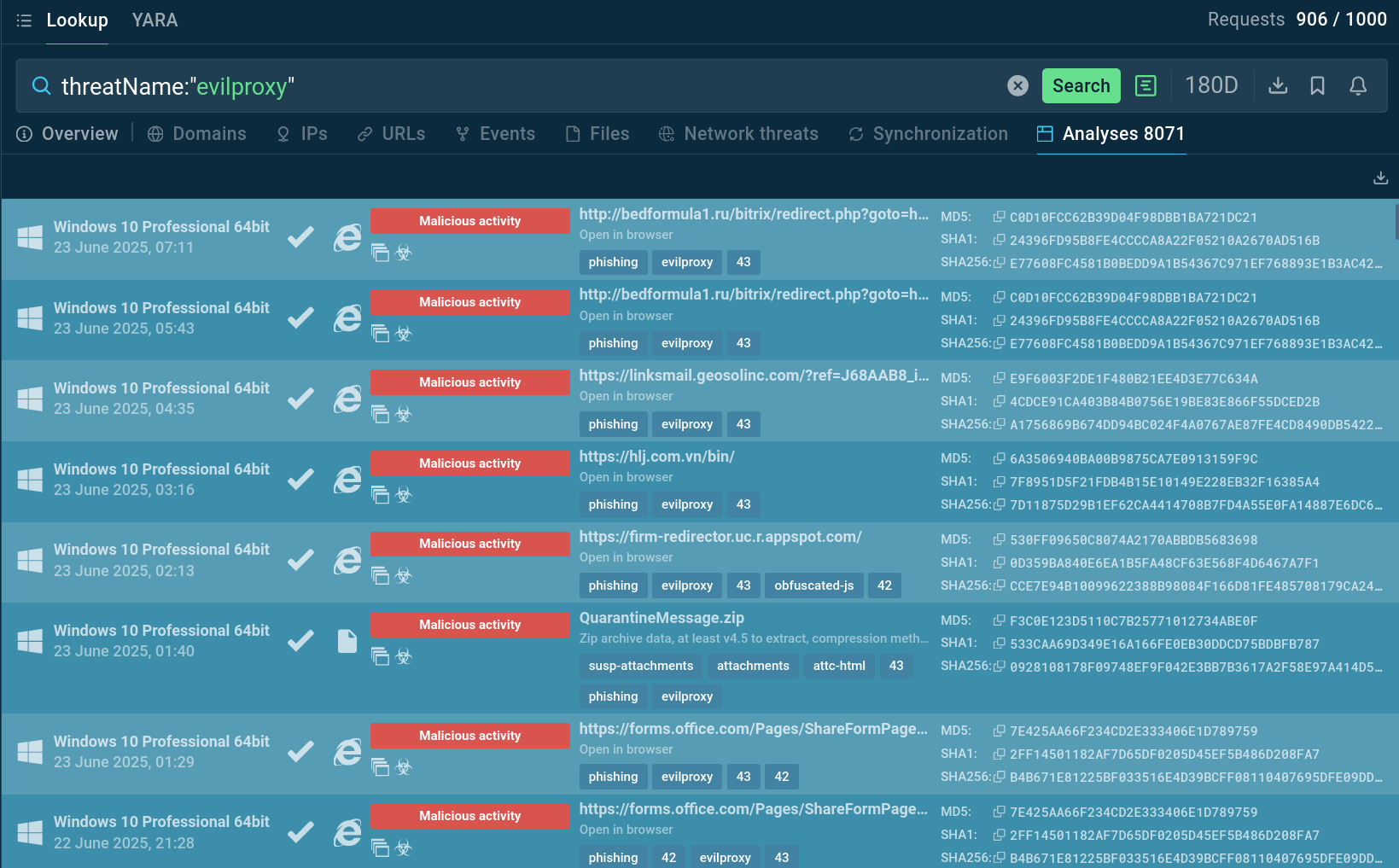
You can choose a freshly submitted analysis session and view EvilProxy in action along with its network connections, process details, attackers’ TTPs, and IOCs extracted from the malware’s configuration.
Watch an analysis session of EvilProxy fresh sample
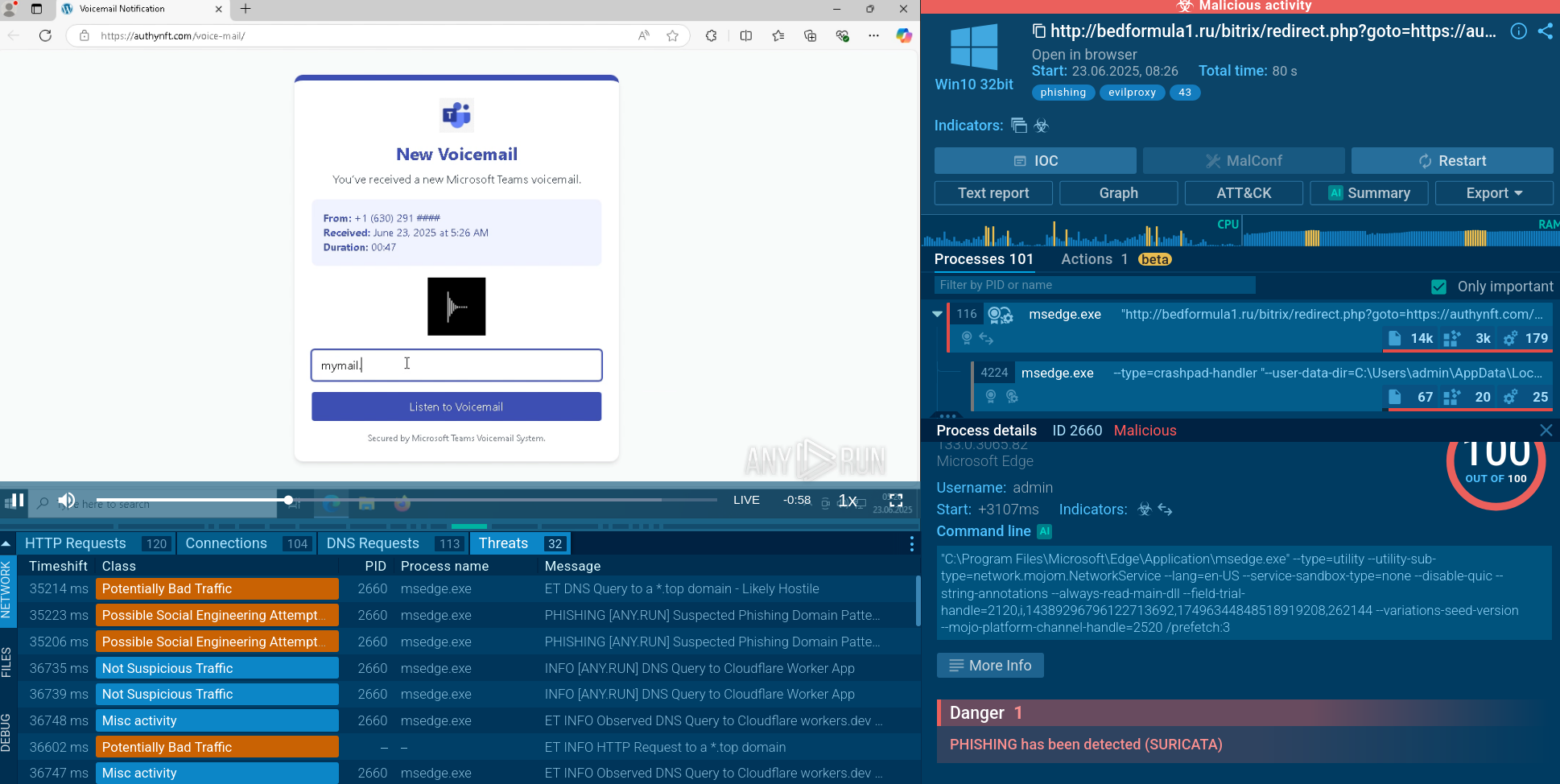
The execution chain of the EvilProxy phishing kit begins when a victim receives a phishing email that appears to originate from a trusted service or brand, such as DocuSign, Adobe, Concur, or another legitimate-looking website. These emails often contain a malicious link that exploits an open redirect vulnerability on a legitimate domain, allowing attackers to bypass email security filters and avoid detection.
When the victim clicks the link, they are redirected through several legitimate websites before landing on a phishing page that impersonates a genuine login portal—typically Microsoft 365 or a similar service. In one observed task, the lure involved a fake voicemail message that prompted the user to enter their email address, after which they were redirected to a counterfeit Microsoft login page. Another case involved a fake "Secure Vault" prompt.
View another analysis session of EvilProxy
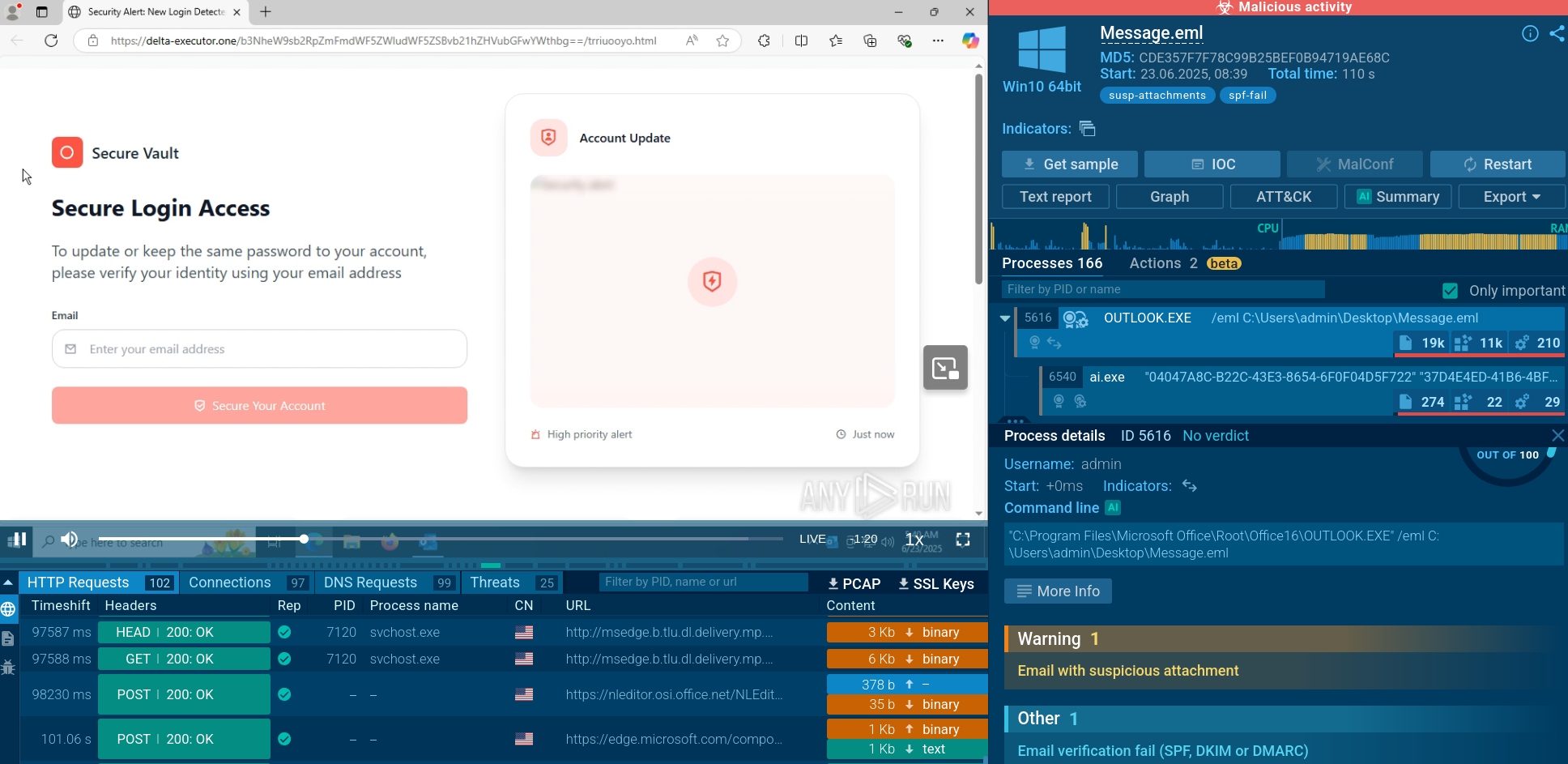
The phishing pages are powered by the EvilProxy framework, which acts as a reverse proxy. It fetches live content from the real login page and displays it to the victim, making the phishing site look legitimate. As the victim enters their username, password, and two-factor authentication (2FA) code, EvilProxy intercepts these credentials in real time. The stolen credentials and 2FA tokens are immediately used on the attacker’s side to generate a valid session cookie, effectively bypassing MFA protections.
The attacker hijacks the session by proxying the victim’s traffic, allowing them to impersonate the victim and access the legitimate service without needing to re-enter credentials or 2FA tokens. This enables persistent access to the account. To evade detection, EvilProxy employs techniques such as browser fingerprinting, IP reputation checks, and filtering out connections from security researchers, bots, VPNs, proxies, Tor nodes, and virtual machines.
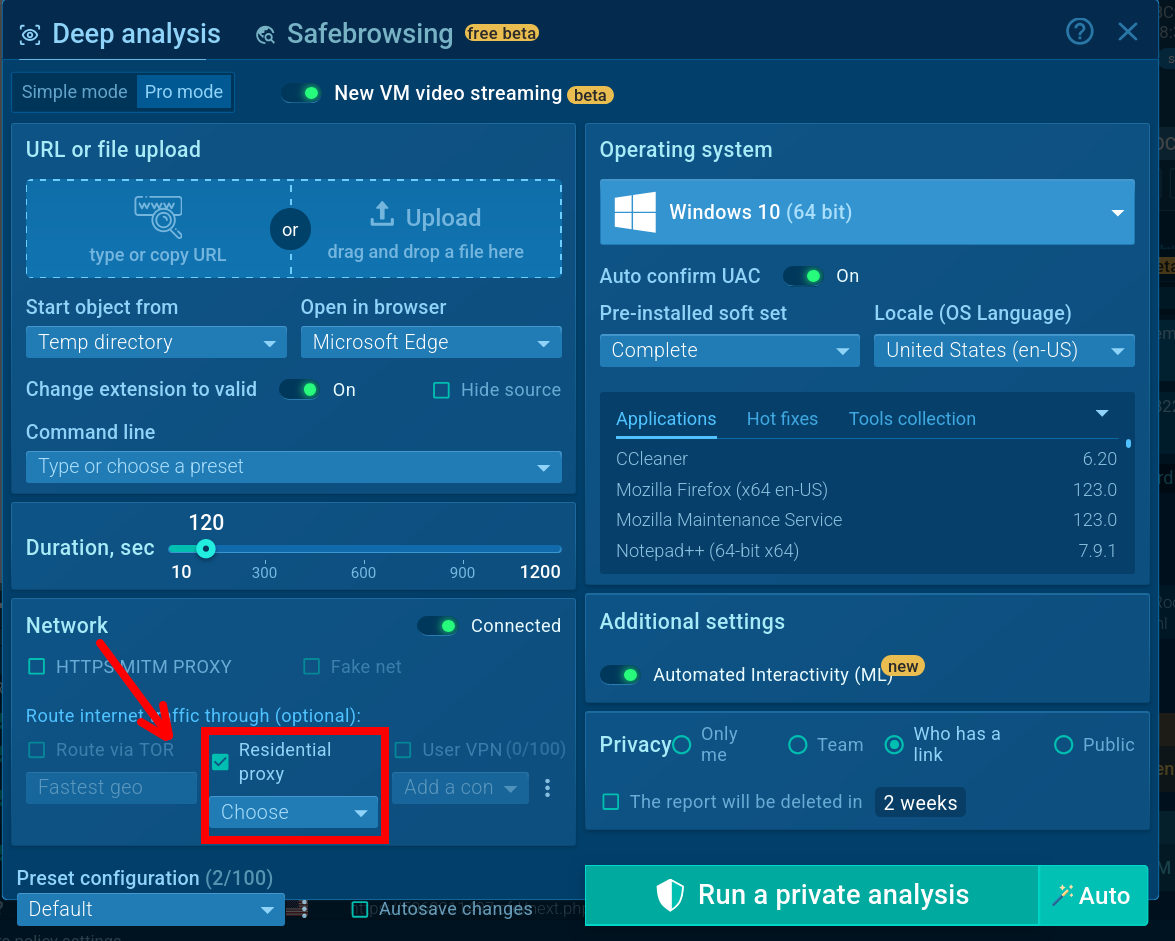
ANY.RUN’s Residential Proxy feature in the Sandbox helps users mask their traffic to appear as if it originates from real consumer devices rather than hosting environments, enabling full observation of the phishing attack chain without being blocked.
Gathering Threat Intelligence on EvilProxy malware
Threat intelligence provides actionable data for proactively defending against EvilProxy and the like.
ANY.RUN’s Threat Intelligence Lookup supports quick IOC checks for immediate verdicts but also allows deep research that brings understanding of malware’s behaviors, architecture, and tactics.
Extract IOCs from Sandbox analyses and explore them further via Threat Intelligence Lookup:
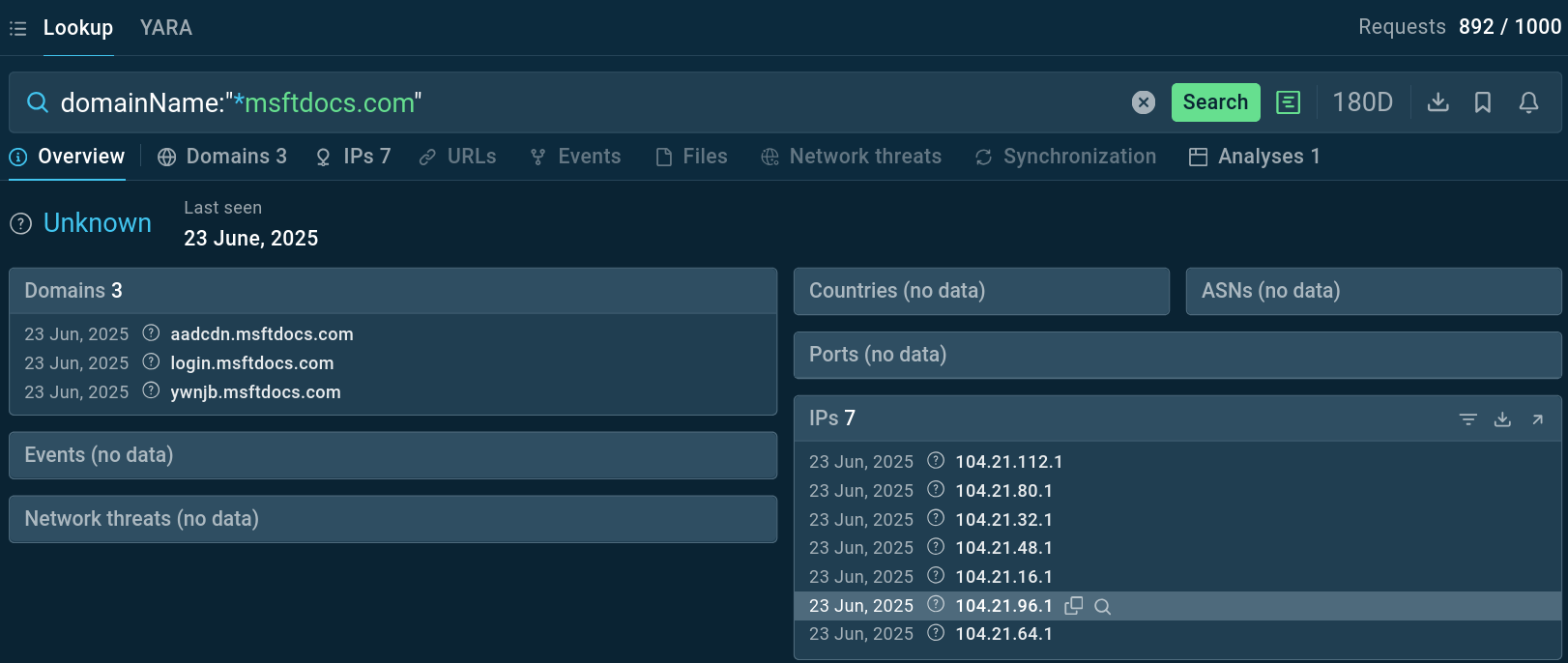
Threat intelligence empowers defenders to:
- Identify and block EvilProxy domains and IPs in near real-time.
- Gather IOCs related to active EvilProxy campaigns.
- Analyze infrastructures associated with EvilProxy operators.
- Track adversary tactics, techniques, and procedures (TTPs) to preemptively defend against evolving campaigns.
- With TI feeds, SOC teams can enrich alerts, prioritize responses, and reduce false positives.
Conclusion
EvilProxy is a powerful weapon in the phishing landscape, offering a turnkey solution for bypassing MFA and hijacking sessions. It demonstrates the growing professionalization of cybercrime and underscores the urgent need for organizations to upgrade their defenses. Traditional security measures are no longer enough—organizations must adopt phishing-resistant MFA, leverage threat intelligence, and continually train users to recognize the signs of these highly convincing attacks.
Gather actionable intelligence via ANY.RUN’s TI Lookup: start with 50 trial requests.
Other malware & phishing threats
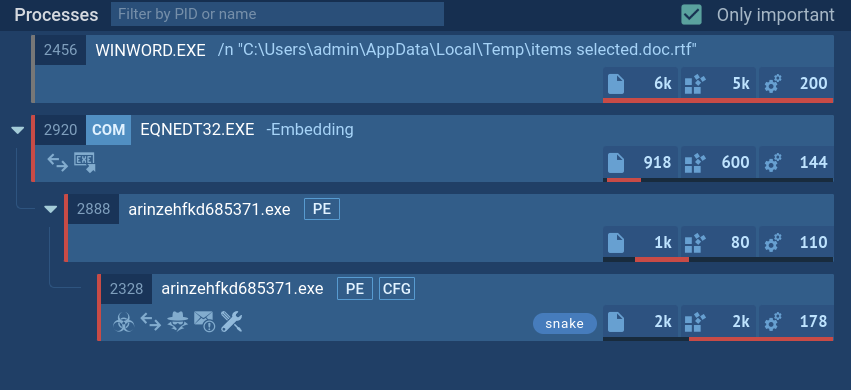 KeyloggerA keylogger is a type of spyware that infects a system and has the ability to record every keystroke made on the device. This lets attackers collect personal information of victims, which may include their online banking credentials, as well as personal conversations. The most widespread vector of attack leading to a keylogger infection begins with a phishing email or link. Keylogging is also often present in remote access trojans as part of an extended set of malicious tools.
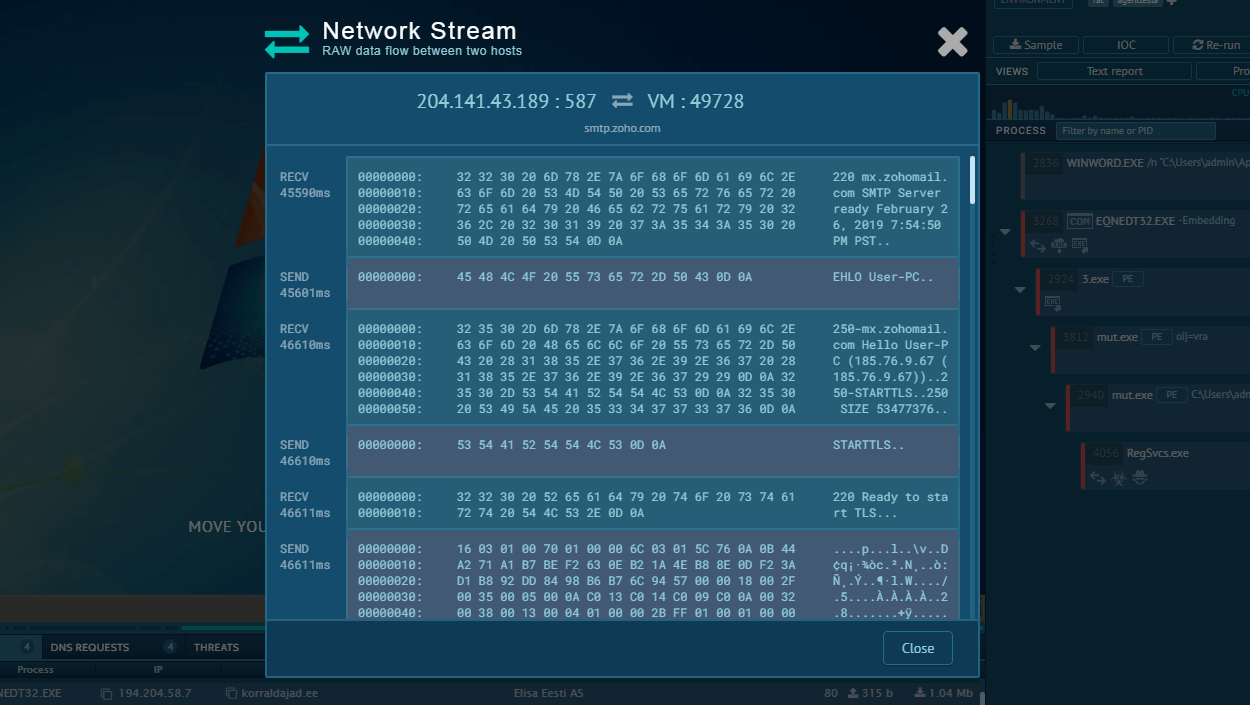 Agent TeslaAgent Tesla is spyware that collects information about the actions of its victims by recording keystrokes and user interactions. It is falsely marketed as a legitimate software on the dedicated website where this malware is sold.
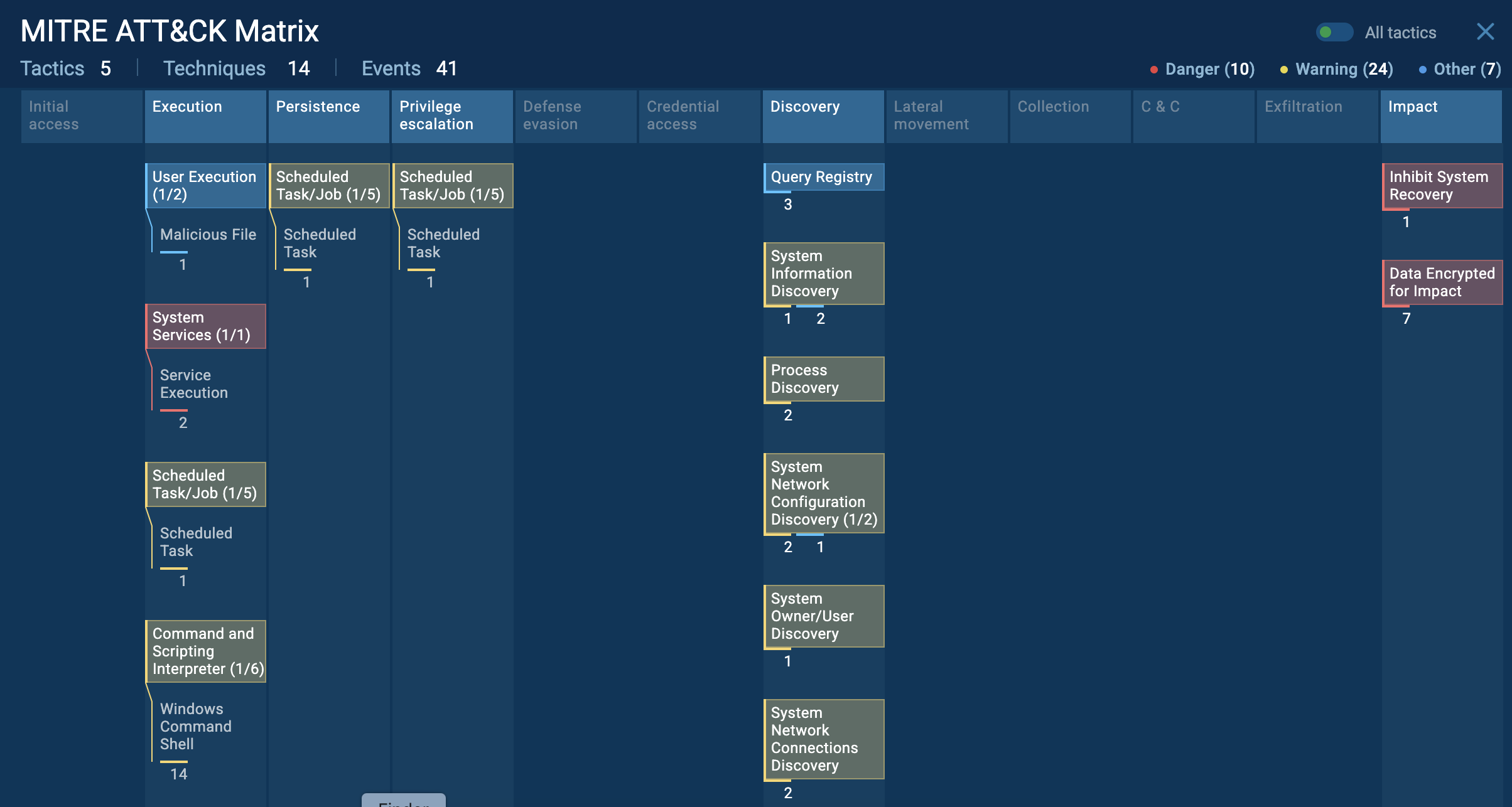 Fog RansomwareFog is a ransomware strain that locks and steals sensitive information both on Windows and Linux endpoints. The medial ransom demand is $220,000. The medial payment is $100,000.
First spotted in the spring of 2024, it was used to attack educational organizations in the USA, later expanding on other sectors and countries. Main distribution method — compromised VPN credentials.
 Black BastaBlack Basta is a ransomware-as-a-service operated by Storm-1811. It emerged in 2022 and uses double extortion tactics, encrypting data and stealing it for ransom. The malware often gains access through spear-phishing and uses tools like QakBot and Cobalt Strike. It's known for exploiting system vulnerabilities and using advanced obfuscation techniques.
 QbotQbot is a banking Trojan — a malware designed to collect banking information from victims. Qbot targets organizations mostly in the US. It is equipped with various sophisticated evasion and info-stealing functions and worm-like functionality, and a strong persistence mechanism.